
life *after* getting canceled.
what do we do with people who fuck up? where do we go when we're the ones who fuck up? who do we become?

in january 2024, I had over 300,000 followers on a tiktok account that I created specifically to talk about neurodivergence, especially autism and ADHD.
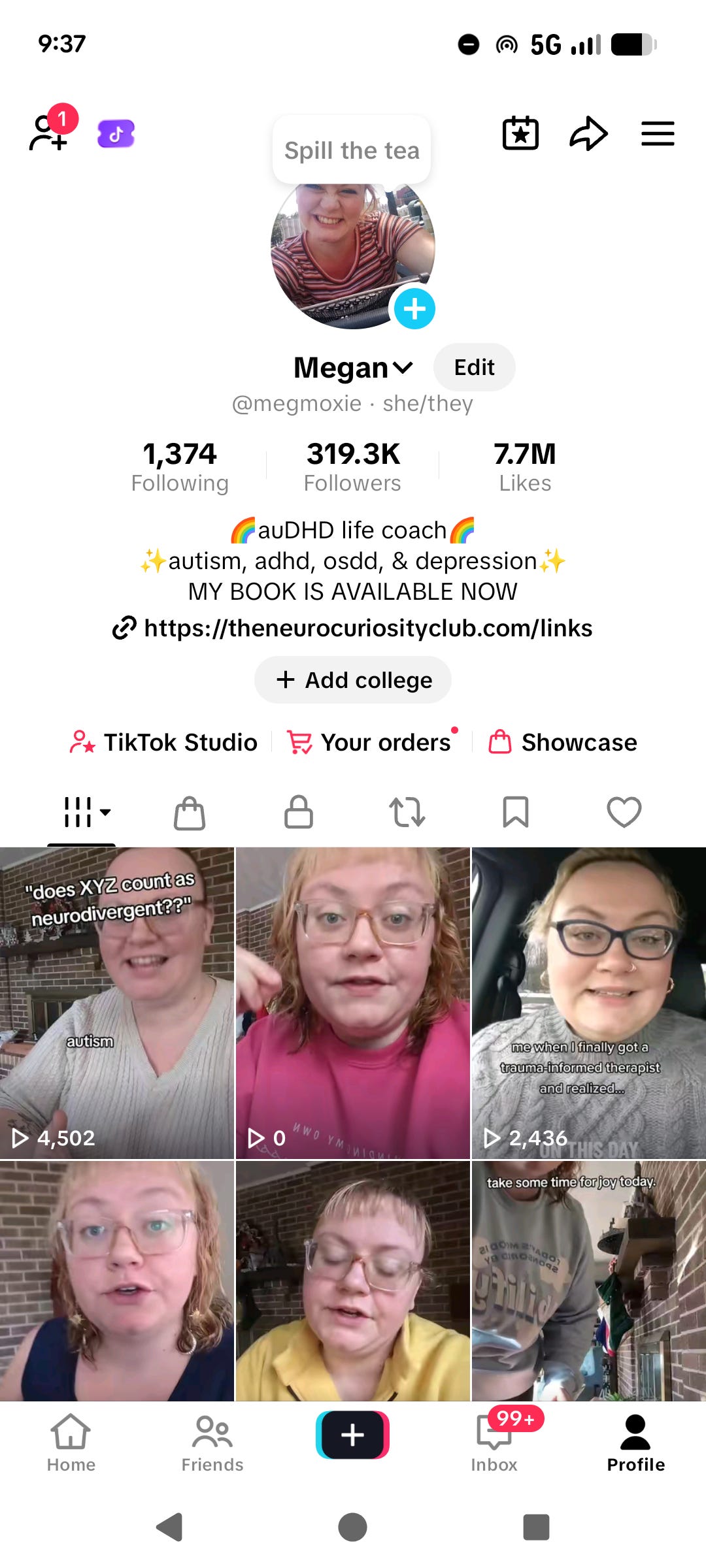
I hosted an annual virtual event that brought in thousands of attendees and tens of thousands of dollars. I got a book deal to write my first book, Welcome to AuDHD, and published it, selling thousands of copies in the first few months. I grew an email list of over 12,000, and all kinds of people signed up for it, from teens trying to figure themselves out, to therapists trying to learn more to help their clients.
I don’t say all this to brag, although I am very proud of my work.
I say all this because the truth is, it’s been really hard to walk away from all of that notoriety. I spent years showing people that they could trust me, that I really knew my stuff about neurodivergence, and now, I’m leaving it all behind.
why?
because despite all the big numbers, despite the book deal and the followers and the glow of knowing I helped someone understand themselves better, I was deeply ashamed of myself, and yes, of my work.
because in early 2024, I got canceled.
I don’t mean a few people were mad at me. I mean, there were hundreds of videos about me on tiktok, calling me evil, a conman, and claiming that I was taking advantage of the vulnerable disabled community.
people hated me.
all because I made two mistakes.
mistake #1: starting a conversation about whether autism was a disability or a disorder that I was not ready to lead. I was rude, condescending, and certain I was right. I spoke over more marginalized autistic folks, and understandably, people were hurt and upset.
however, no amount of apologizing seemed to help. my apologies were deemed “insincere” or “just to save face.” but I didn’t know what else I could do, so I moved on.
mistake #2: a few weeks later, I had an idea. what if I could teach other people to coach neurodivergent people too? it was such a good career for me, I figured it would be a great career for lots of other neurodivergent folks who struggled with traditional employment too.
I made the sales page, started selling the program, and had my first couple of signups within 24 hours.
but people were furious. some called it a pyramid scheme, others said I was misusing the word “neurodivergent,” and several people called back to mistake #1, saying this pattern of wrongdoing indicated that I wasn’t a good person making mistakes, but rather a bad person who could no longer hide her malicious intentions.
and it wasn’t just strangers. people I’d paid to speak at my events, people whose names I said in important rooms, people who I trusted, opted not to contact me personally, despite having my email and phone number. and instead, they dragged me on socials.
look, maybe you believe in the power of cancel culture. maybe you don’t even see this as “canceling,” but rather as “consequences.”
if so, this space is not for you.
because this whole cancellation campaign was wrong. cancel culture in general is wrong. because it is rooted in shame. it claims that the only way to atone for your mistakes is by disappearing. from the internet, but also maybe from the world.

for a year and a half, I quit tiktok, unable to even look at the app’s logo without having a panic attack.
but I kept trying to make this business work.
I apologized publicly, many times, in many ways. I tried to process people’s criticism and make sense of my mistakes so I wouldn’t make them again.
for many, it meant nothing.
they believed I was bad. not only that, but that I had always been bad, it was just that the mask had finally slipped.
it was, in all honesty, my greatest fear.
I grew up with tremendous amounts of shame. I have been terrified my whole life of being “found out” as a bad person because I was certain I was just…inherently terrible.
and then it happened. I got canceled, people hated me, and they felt just as certain as I was that I just totally sucked. and I had no idea how to process that.
so I didn’t, really. I just apologized and tried to keep doing some good in the world.
but my business was never the same after that, even after I got back on tiktok mid-2025. it was hard, slow, and I always felt like I was doing something wrong. like I had to frontload all the nuance, address every possible critique, before I could make my point.
I was watering myself down, operating not from a place of joy or helpfulness, but from self-protection.
my primary goal was no longer to lead neurodivergent people toward a better world where they understood themselves and each other. my primary goal was to stay safe from any additional shame.
and my business floundered because of it. I was no longer that magnetic, bold creator who helped people.
I was a shadow, an echo, a hesitant friend, hanging around the edges of the conversation, waiting to be invited in. and I worked three times harder to get half the results.
half the views, half the money, and far less than half of the satisfaction.
I kept thinking it had to turn around sometime. it had to get better. it had to.
but it didn’t.
finally, in january 2026, I reached my breaking point.
I was burnt the fuck out. I was chronically exhausted, sleeping upwards of 11 hours every day. when I wasn’t asleep, I was working. evenings, weekends, the wee hours of the morning. I did little else. plus, the business was barely bringing in enough money to pay for daycare for my twin girls, meaning I was working all those hours just to break even.

but I might have kept at it, if it weren’t for my very smart, but very destructive brain.
I’ve dealt with suicidal thoughts for most of the second half of my life thus far. but by january 2026, they had reached a howling pitch that was completely unignorable.
I was very nearly hospitalized.
hell, maybe I should’ve been.
this was my brain’s way of forcing me to acknowledge that none of this was working anymore. its way of saying “if you won’t listen to your intuition telling you that you’re unhappy, I’ll make damn sure you know you’re unhappy, as unhappy as it gets.”
finally, finally, I threw my hands up and said, “fine, you win, I’m done.”
and I announced a year-long sabbatical.
we would pull the girls out of daycare, I’d pick up part-time work in the early mornings or evenings, and we’d just coast for a year while I tried to get my mind right.
and that distance from the business was exactly what I needed to finally see that the business itself was the problem.
immediately upon announcing my sabbatical, I slept better. I had time to research my iron-deficiency anemia and start actually taking care of it. I started cleaning my space on a regular basis, working out, and actually playing with my three young kids. I wrote more of my novel, met up with friends, and did a bunch of other stuff I hadn’t had time or capacity for in nearly two years.
and, much to my surprise, within two months, I felt a strange tug back to business.
but not my business as it was. not the neurodivergence and coaching and whatnot.
I felt called to talk about shame.

not a huge shock, really, considering shame has always been a major issue with my own mental health, and it was even the topic of my first-ever viral tiktok.
once I stepped away from this belief that all I had to do was work harder, work more, and I’d finally be okay again, I was able to actually be okay again.
and part of me wants to just pick back up where I left off with my auDHD coaching business. surely, now, with this improved mindset, I could handle it, right? what a waste, to spend years building up a brand only to abandon it.
but I’m not abandoning it. I’m gifting that work to the next round of folks who want to talk about this stuff. and it wasn’t a waste. it was a glorious expansion, and now it’s time for it to constrict so that other areas can expand.
like my work around shame.
if I’m being honest, most of the work I do with auDHDers is around shame anyway. ask any of my clients, the most meaningful work we usually do is all about coming to terms with their diagnoses, accepting that the world is the problem, not them, and reducing shame around issues like procrastination or distractibility.
I love working with shame.
between my autistic pattern-recognition skills and the nature of my own trauma, I have an uncanny ability to pick up on people’s shame, and guide them toward a better understanding of it. and my years doing my own healing work has given me lots of insight on what the hell to do about shame, anyway.
so yes, it feels very weird to be walking away from a business I’ve spent five years growing to a very traditionally “successful” level.
but also…it feels like the most natural thing in the world.
keep an eye on this space. lots of expansion is coming.
if you enjoyed this article, if you want to see what I do with this new work as a shame oracle, please feel free to subscribe. I do my best to post weekly, free articles:
simply having you in my life and getting to know your amazing brain throughout this time more than returns the favor to me! and don't worry, if you liked my work so far, you're going to love what's coming now 🖤
Megan, I've followed you from afar in other circles and always admired your determination and grit (at least that's what it looked like to me). I'm so sorry you were put through this ordeal, but I can see how it will be the catalyst of something so meaningful for so many people.
I'm honored to subscribe and look forward to reading more.